
Summary:
- The dental implant procedure happens in four stages: assessment, surgical placement, osseointegration, and crown fitting.
- The full process typically takes three to nine months, depending on bone health and healing speed.
- Osseointegration, the healing phase where bone bonds to the implant, usually takes three to six months on its own.
- Same-day provisional teeth (immediate loading) are possible for suitable patients, but are assessed on a case-by-case basis.
Getting a dental implant involves more than simply replacing a missing tooth. The treatment is carried out over several stages, giving the implant time to heal and fuse with your jawbone before the final crown is fitted.
While every patient’s treatment plan is unique, most follow the same key stages, from the initial consultation and implant placement to healing and fitting the final restoration.
This guide walks you through each stage of the dental implant procedure so you know what to expect before treatment begins.
The Quick Answer: What Does the Dental Implant Procedure Involve?
Dental implants are placed across four stages: assessment, surgical placement, a healing period called osseointegration, and crown fitting.
The whole process typically takes three to nine months from start to finish, depending on your bone health and how you heal. It isn’t a single-appointment treatment; each stage has to be completed before the next one can begin.
Stage 1: Assessment and Treatment Planning
Here’s what happens before anything is scheduled, and how your dentist decides on the right approach.
What Happens at This Appointment
Your dentist carries out a clinical examination along with a dental X-ray or Cone Beam Computed Tomography (CBCT) scan, a three-dimensional image that measures the height, width, and density of your jawbone at the implant site.
This is also a good time to ask questions and understand your treatment plan before anything is scheduled.
Choosing the Right Implant Type
Based on what the scan shows, your dentist works out whether a standard implant (8 to 14mm) or an ultra-short implant (5.2mm) suits your bone better.
What "Enough Bone" Actually Means
If there isn’t quite enough bone at the site, you’re not automatically ruled out. Some patients qualify for an ultra-short implant instead, which may avoid the need for a bone graft altogether, though this depends entirely on your own scan.
How Our Stability First Philosophy Comes to Play?
Stability First is the principle behind how we plan every implant at Newlife Dental Practice: prioritising a stable, well-integrated result over the fastest route to a fixed tooth.
In practice, this can mean choosing an implant system positioned to work with your existing bone rather than against it, planning around your own CBCT scan rather than a one-size-fits-all protocol, and recommending a bone graft, sinus lift, or ultra-short implant, whichever gives the most stable outcome for your particular bone.
Stage 2: Implant Placement Surgery
Here’s what happens on the day itself, and why it’s usually less daunting than people expect.
Getting Ready for Surgery Day
Your dentist will go through anything specific to your case at your consultation.
However, it generally helps to let your dentist know about current medications or health conditions in advance, and to keep the day itself relatively light, since some tenderness afterwards is normal.
In Singapore, many patients book surgery day for a Thursday or Friday so any initial tenderness settles over the weekend, though your dentist can advise on timing based on your own schedule.
What You'll Feel
The area is numbed with local anaesthesia first. Once it’s taken effect, most patients describe feeling pressure and movement rather than pain during the procedure itself.
Placing the Implant
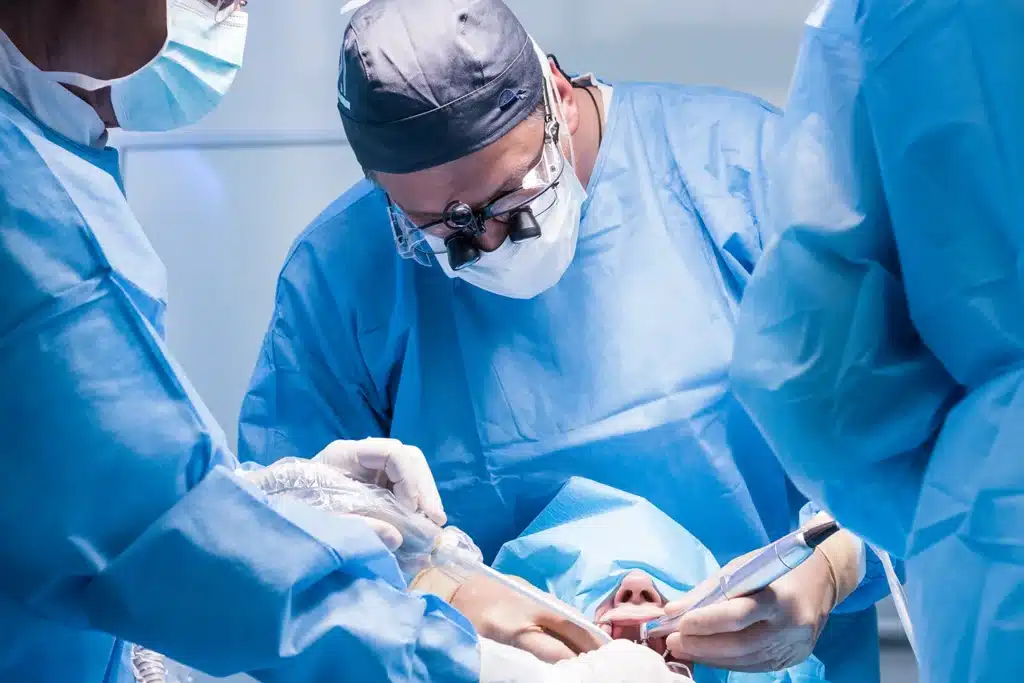
Your dentist makes a small incision in the gum, prepares the implant site, and places the titanium post into the jawbone.
With the copaSKY system, the implant is positioned so the back taper sits just below the bone crest, which allows bone chips to form around it during early healing.
What Happens Next
A cover screw or healing abutment is placed over the implant, and the gum is closed over or left slightly exposed, depending on your case. Some patients receive a provisional crown the same day.
You’ll go home with aftercare instructions, any medication needed, and guidance on what to eat while healing.
Stage 3: Osseointegration, the Healing Phase
Here’s what happens during this phase, and why it takes as long as it does.
What's Actually Happening
Osseointegration is the process by which bone cells gradually bond to the implant surface over weeks to months. It typically takes three to six months, though this varies from person to person and isn’t something that can be sped up.
How the Implant Surface Supports Healing
The copaSKY system uses three distinct surface zones along the implant: a machined collar at the top to encourage healthy soft tissue around the gum line, an acid-etched middle zone, and a further roughened zone at the tip designed to support bone attachment.
What to Do, and What to Watch For
During this phase, you’ll generally be advised to avoid putting pressure on the implant site and to keep up good oral hygiene around it.
Mild swelling or tenderness in the first few days is normal, but ongoing pain, swelling that worsens, or any signs of infection are worth flagging to your dentist rather than waiting it out.
Stage 4: Crown Fitting and Final Restoration
Here’s what happens once your dentist confirms healing is complete.
- Digital modelling of the implant site: Digital records are made for transfer to the dental laboratory where the final crown prosthesis will be made.
- Fabricating the crown: A crown, usually ceramic or zirconia, is custom-made to match the colour and shape of your surrounding teeth.
- Fitting and adjusting: The crown is fitted onto the implant, and your bite is adjusted so it feels comfortable and functions properly, completing the treatment.
A Note From Dr Aaron Hoo
Once osseointegration is complete, the implant becomes a very stable component of your oral environment. This allows us to place the definitive crown to restore health, function and aesthetics.
Wondering how your own healing is likely to go? Get in touch with Newlife Dental Practice, and we’ll give you a realistic sense of your timeline based on your own bone health.
What About Immediate Loading? (Same-Day Provisional Tooth)
Here’s what happens with same-day teeth, and why it isn’t offered to everyone.
What It Actually Means
Immediate loading means a provisional crown is fitted on the same day as your implant surgery, rather than waiting for osseointegration first.
Who Qualifies
Not every patient is a candidate. It generally requires good bone density and favourable anatomy at the implant site. However, the final decision always rests with your treating dentist after assessment.
Provisional vs Final
Whether or not you receive a same-day tooth, it’s a provisional, not the finished result. The final crown is only fitted once osseointegration is complete.
Curious whether you’d qualify for a same-day tooth? Book a consultation, and we’ll assess your bone density and anatomy to find out.
How Long Does the Dental Implant Process Take in Singapore?
Here’s what happens when you add all four stages together.
The Overall Timeline
From your initial consultation to the fitting of the final crown, the dental implant process typically takes around three to nine months. The exact timeline depends on your treatment plan and how quickly your jawbone heals after implant placement.
What Can Extend the Timeline?
Some treatments take longer than others. Your timeline may be extended if you need bone grafting or a sinus lift before implant placement, if your jawbone takes longer to heal, or if certain medical conditions affect recovery.
For upper jaw cases, however, our Sinus Stability Protocol could reduce some of the extra time needed for treatment. We favour a less invasive technique performed through the implant site itself, rather than a traditional lateral window sinus lift. In suitable cases, this can support a shorter overall timeline, around three months to restoration rather than nine to twelve.
Speak to Us About Your Own Timeline
No two dental implant cases are exactly alike. Factors such as your bone health, the location of the missing tooth, whether bone grafting is needed, and how quickly you heal can all affect your treatment timeline.
At Newlife Dental Practice, we’ll assess your bone health and treatment needs, then provide a personalised timeline and walk you through every stage of the process before treatment begins.
Frequently Asked Questions
How many visits are needed for a dental implant in Singapore?
At minimum, you’ll need a consultation visit, a surgical visit, a modelling visit and a crown fitting visit. Additional review appointments may be arranged if necessary.
Can I have implants in both jaws at the same time?
In some cases, yes, this is assessed individually based on your bone health and overall treatment plan.
Is the implant placed in one session, or is it staged over multiple visits?
The implant itself is placed in a single surgical session, but the overall treatment, from assessment to final crown, spans multiple visits across several months.
What is osseointegration, and why does it take several months?
Osseointegration is the biological process where bone gradually fuses to the implant surface. It takes time because bone remodelling and attachment happen gradually, and rushing this stage risks the implant not integrating properly.
What happens if the implant does not integrate with the bone?
This is uncommon but can happen. If it does, your dentist will assess the site and discuss next steps, which may include removing the implant and allowing the area to heal before trying again.
Do I need to take time off work after implant surgery?
Most patients experience minimal downtime and return to normal activities within a day or two, though individual recovery varies depending on the complexity of your case.
Can I Eat Normally Between Appointments While Waiting for My Crown?
During osseointegration, it’s generally best to avoid chewing directly on the healing implant site and to stick to softer foods where the site is sensitive. Your dentist will give you specific guidance based on where the implant is and how your healing is progressing.
